Reception curriculum
At our school, the Reception curriculum is designed to give children the strongest possible start to their learning journey. We follow the principles of Development Matters, ensuring that teaching is play‑based, carefully sequenced, and rooted in what children need to thrive.
Our curriculum supports children to become curious, confident and independent learners, and builds progress across all seven areas of learning.
Communication and Language (CL)
We develop children’s speaking and listening skills so that, by the end of Reception, they can:
- Listen carefully and understand instructions
- Join in conversations, retell stories and use new vocabulary
- Express their ideas clearly and confidently
This is achieved through high‑quality story time, role play, small‑group talk and rich adult‑child interactions. We use the SHREC approach, having weekly oral storytelling sessions and structured conversations which are carefully planned to support the children's vocabulary.
Personal, Social and Emotional Development (PSED)
Learning is designed to support children to:
- Build positive relationships and play cooperatively
- Manage their feelings and behaviour
- Develop confidence, independence and resilience
Our caring environment, consistent routines and strong relationships help children meet the PSED Early Learning Goals. We use the Zones of Regulation, so all children learn the strategies needed to help them self-regulate.
Physical Development (PD)
We support children to develop the strength, coordination and control needed to:
- Move confidently and safely
- Use tools, equipment and materials with increasing accuracy
- Develop the fine‑motor skills needed for early writing, including a secure pencil grip
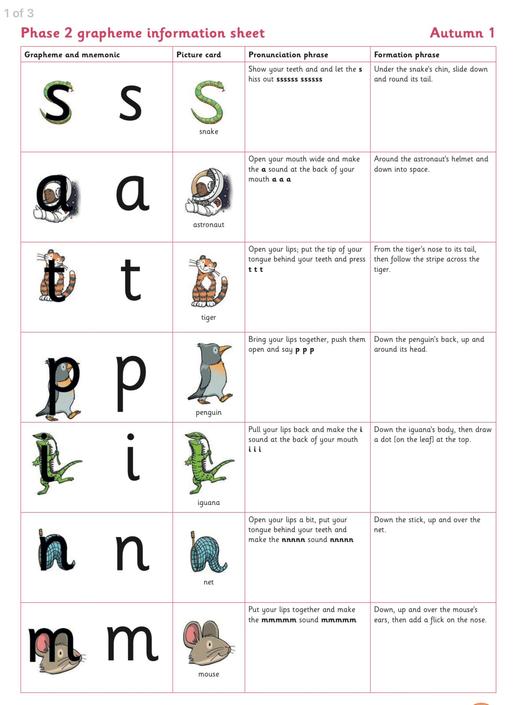
We do daily hand-writing practice and follow the Penpals and Little Wandle guidance to help ensure all children form the majority of letters correctly by the end of reception so they are well prepared for year one.
Specific Areas of Learning
Literacy
Our Literacy curriculum prepares children to meet the ELGs by enabling them to:
- Recognise and write taught sounds through systematic phonics
- Blend sounds to read words and simple sentences
- Develop comprehension through high‑quality stories, rhymes and non‑fiction
- Write simple sentences that can be read by others
Daily phonics, shared reading and purposeful writing opportunities support strong progress.
Mathematics
Our Maths curriculum builds the foundations children need to achieve the Early Learning Goals by developing their ability to:
- Understand numbers to 10 and beyond
- Subitise, count accurately and compare quantities
- Solve simple addition and subtraction problems
- Explore shape, pattern, measures and spatial reasoning
Children learn through hands‑on resources, real-life maths and practical investigation using a wide range of manipulatives..
Understanding the World (UTW)
Children gain the knowledge they need to meet the ELGs by exploring:
- The natural world, seasons and living things
- Their families, community, traditions and cultures
- Past and present events
- Technology and how things work
Outdoor learning, forest schools, visits, investigations and celebrations deepen children’s understanding.
Expressive Arts and Design (EAD)
We provide rich creative opportunities that help children to:
- Use different media, tools and techniques
- Create artwork, music, dance and imaginative play
- Share ideas and respond to what they see, hear and create
Children express themselves freely and develop confidence in their creative abilities.
HERE IS MORE INFORMATION ABOUT READING:
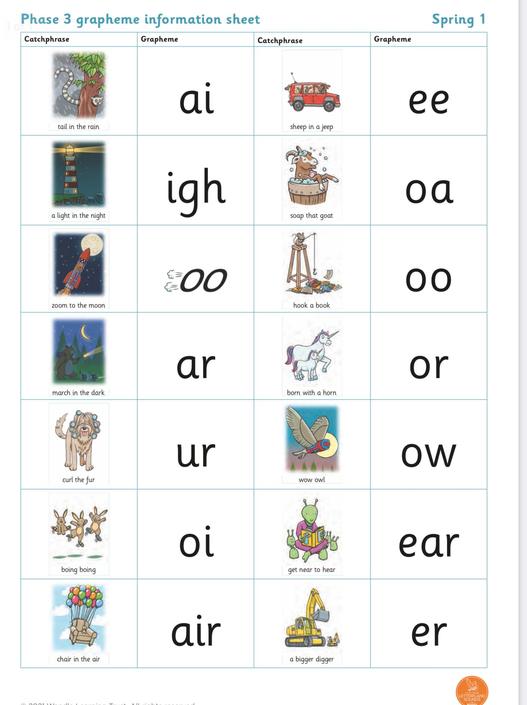
We use the Little Wandle scheme to teach phonics in our school. All children take part in daily phonics sessions. Please see the website linked here, for detailed information about how you can help your child:
https://www.littlewandlelettersandsounds.org.uk/resources/for-parents/
We are often asked about how to pronounce the letters and the language used to help pupils form the letters. Here are some wonderful videos to support you with this and also with supporting your child's reading and writing at home.
Little Wandle phonics on You Tube
|
|
|
|
|